

Clinic Online Booking Software Thailand: Cut Front-Desk Phone Volume
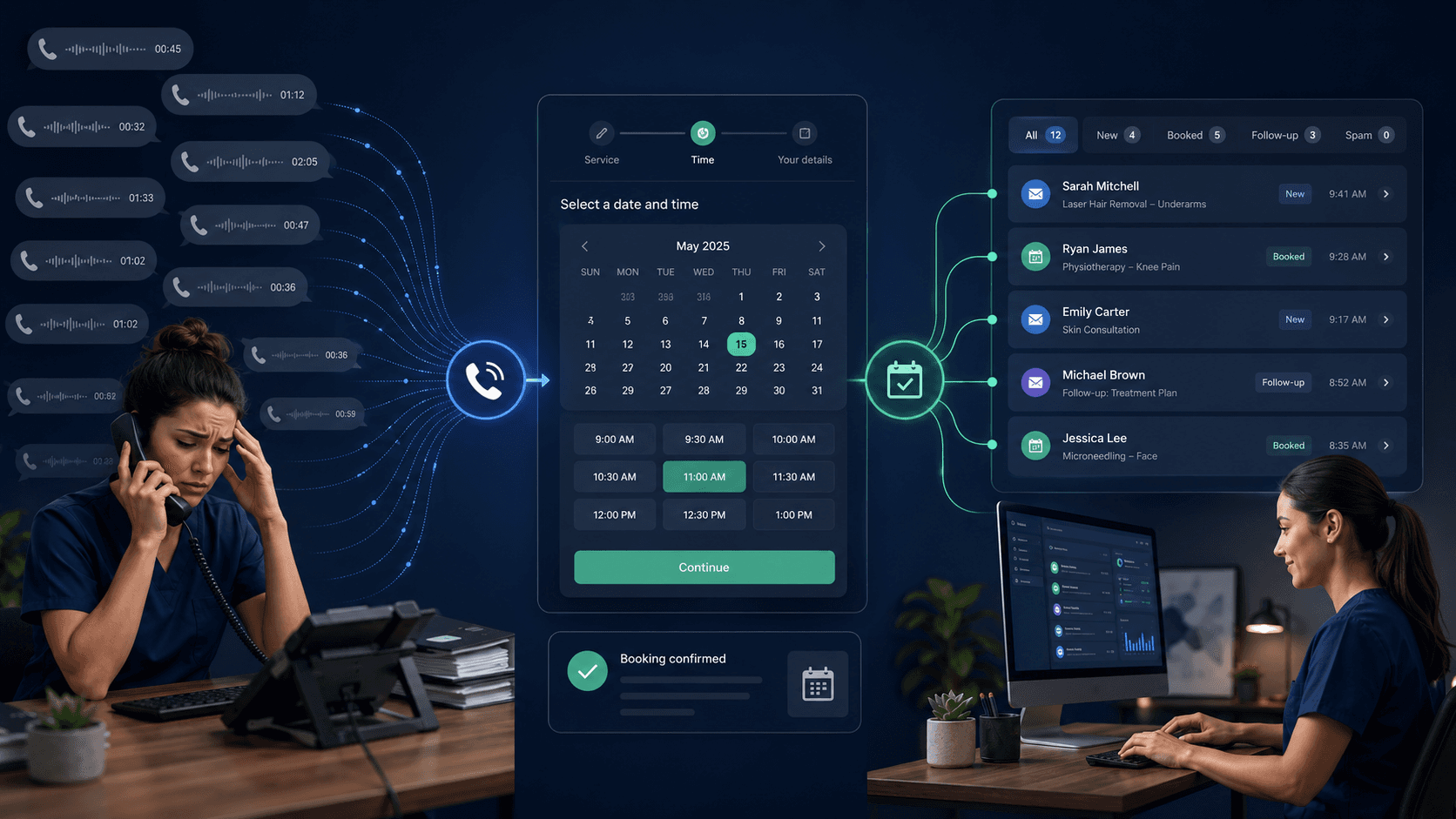
Most clinic front desk teams are managing too many calls for what is fundamentally a repetitive set of tasks: booking appointments, answering the same questions about availability and services, confirming times, and handling reschedule requests.
Each of those calls takes two to five minutes. Each requires a team member to stop what they are doing, pick up, gather information, check availability, confirm, and log it. Multiply that across a busy clinic day and a significant portion of front desk capacity is tied up handling a queue of calls that, in many cases, could have been handled through an online booking or messaging channel.
This is not a staffing problem. It is a channel problem. And the clinics that have addressed it have done so not by hiring more front desk staff, but by redirecting inquiry volume to channels that do not require real-time human response for every transaction.
What High Call Volume Is Actually Costing the Clinic
It is not just time - it is missed bookings and staff capacity that could be used elsewhere
The visible cost of high call volume is a busy front desk. The less visible cost is what happens when the phone is engaged or unanswered.
Missed calls are missed bookings
A patient who calls during a busy period and cannot get through does not always call back. In many cases - particularly for aesthetic treatments, wellness services, or elective specialist appointments - they simply try the next clinic. There is no record of the missed call as a missed booking. It is invisible revenue loss.
Calls during clinic hours disrupt in-clinic patient care
When front desk staff are on a call, they are not managing check-in, they are not answering questions for patients who are physically in the clinic, and they are not handling other operational tasks. The phone call takes priority. In-clinic service quality pays the cost.
Repetitive calls create high cognitive load
Answering the same five questions many times a day - What are your hours? Do you have appointments this week? How much does X treatment cost? How do I cancel? - is low-value work for trained front desk staff. It occupies time and attention that could be directed to work that genuinely requires human judgement.
After-hours calls are entirely lost
Any patient who calls outside clinic hours and reaches an answerphone is unlikely to leave a message and wait. For clinics in markets where patients expect immediate or near-immediate responses, the after-hours call gap is a structural lead loss problem.
Why Patients Still Call When They Would Rather Not
The phone is not the preferred channel for most patients. It is the only channel they can find
Many patients call clinics not because they prefer to, but because they cannot find another way to get a quick answer or make a booking.
This matters operationally. If the only clear path to booking on your clinic's website is a phone number, patients who would prefer to message or book online will call anyway - because there is no alternative.
The same is true of patients who have a simple question about availability or pricing. If they cannot find an easy way to get that answer online, they call. The call takes two minutes for the patient and costs the front desk team the same.
In markets where messaging apps like LINE, WhatsApp, and Facebook Messenger are the dominant communication channel - which includes Thailand and much of Southeast Asia, as well as a growing proportion of patients in the UK - the expectation is that a clinic can be reached through a message. Patients who cannot find a messaging contact often fall back to phone, with lower conversion rates, or simply move on.
Reducing call volume does not mean making it harder to contact the clinic. It means making other contact channels clear, accessible, and fast enough that patients use them by preference.
What Shifts When Clinics Move Booking to Online Channels
The operational difference is significant - but only if the online channel is actually managed
When a clinic successfully shifts a portion of booking and inquiry volume from phone to online channels - website chat, WhatsApp, LINE, Messenger, or a booking form - several things change operationally:
Front desk availability for in-clinic patients improves
When calls drop, the front desk team has more uninterrupted time for in-clinic patient interaction, check-in, and administrative tasks. The patient experience in the clinic improves when staff are not constantly managing incoming calls simultaneously.
After-hours inquiries get captured rather than lost
Online channels - particularly messaging apps - allow patients to reach out at any time. Those messages are there when the team returns in the morning. They are not lost the way an unanswered phone call after closing time is lost, which is one reason reduce no-shows clinic booking system workflows work better when communication stays visible across channels.
Response becomes asynchronous and manageable
A phone call requires immediate response. A WhatsApp message or website chat inquiry can be handled within minutes by a team member who is ready to respond. The front desk team moves from being reactive to incoming calls to managing a queue of messages - a fundamentally different and more manageable operating model.
Patient questions get answered without tying up a phone line
Common questions about services, pricing, and availability can be handled through messaging channels - sometimes with AI-assisted responses - without any team member needing to pick up a phone. The question is answered. The potential patient gets what they need. The front desk is not occupied.
The shift does not happen automatically. If a clinic adds a WhatsApp number to its website but does not monitor it consistently, the channel fails and patients call anyway. The channel needs to be managed - which is where clinic teams often run into the next problem.
What Online Booking Requires to Actually Work
Adding a channel is not the same as managing it
The most common reason online booking channels fail to reduce call volume is that they are added without the workflow to support them. A clinic that adds a LINE account, a WhatsApp number, and a website contact form - but has no shared system for managing messages across all three - has not reduced its operational complexity. It has increased it.
Here is what actually makes online booking channels work:
All channels in one place
If the front desk team has to check WhatsApp on one phone, LINE on another, Facebook Messenger in a browser, and the website inquiry form in a separate tool, messages will be missed. The channels need to come together into a single managed inbox - otherwise adding channels increases the chance of missed inquiries, not decreasing it.
Fast response times on messaging channels
A patient who sends a WhatsApp message and does not hear back for four hours is not going to call back to complain. They are going to book elsewhere. The response speed expectation on messaging channels is higher than on email. Clinics that shift to messaging without the infrastructure to respond quickly create a different problem - slow response on a channel patients expected to be fast. Those fast response times on messaging channels also shape whether a booking page or chat flow converts at all.
A clear booking path from message to confirmed appointment
A patient who messages asking about availability needs a clear booking path from message to confirmed appointment. If the response is "please call us to book" - the channel has failed. The workflow needs to take the patient from inquiry to confirmation within the same channel or with minimal friction.
AI-assisted response for common queries
For clinics with high inquiry volume, AI-assisted chat can handle common questions - hours, services, pricing guidance, how to book - without requiring a front desk team member to respond individually to each one. This is the mechanism that allows online channels to scale without adding headcount.
For a full breakdown of what an effective clinic booking workflow requires, see clinic online booking software.
Practical Steps for Clinic Teams
Where to start without creating more complexity
Audit where your calls are actually coming from
Before redirecting call volume, understand what it is. What questions are patients most frequently calling to ask? Which of those could be answered through a website FAQ, a messaging channel, or an automated first response? Understanding call intent tells you exactly which channels to add and what they need to handle.
Make messaging channels visible and easy to find
If a patient has to search for your WhatsApp number or cannot find your LINE ID on the website, they will not use it. Every patient-facing surface - website, Google Business profile, social pages - should make messaging channels clear and prominent, with a response time expectation.
Do not add channels you are not set up to monitor
Every channel you add is a commitment. A LINE account that is not checked regularly is not a booking channel. It is an inbox full of unanswered messages. Add channels you can manage, then expand.
Consolidate into a single inbox as early as possible
The faster your team has a single place to see all inbound messages - regardless of channel - the faster response times improve and the faster call volume drops. Managing channels separately is the most common reason online booking adds complexity rather than reducing it.
Set a response time standard for messaging channels
Define what a reasonable response time looks like for your clinic - for example, within one hour during clinic hours, and first thing the following morning for after-hours messages. Communicate that standard on your website or in an automated first response. Setting expectations prevents patients from abandoning the channel and calling instead.
Conclusion
High front desk call volume is not an inevitable part of running a clinic
A significant share of it comes from patients who had no other way to get a quick answer or make a booking - not from patients who preferred to call.
Shifting that volume to online channels reduces the load on front desk teams, captures after-hours inquiries that would otherwise be lost, and creates a more manageable operating model for both staff and patients.
The shift requires more than adding a WhatsApp number to the website. It requires the infrastructure to manage those channels consistently - fast response, a clear booking path, and a single view of all inbound communication. Clinics that get that right find that call volume drops as a natural consequence, not as an effort.
Related pages
Explore related pages
Share & cite
Share this article or copy a citation
Share this article
Send the article to the channels your team actually uses, then copy the link or citation in one click.
Suggested citation
Useful for notes, internal docs, or AI tools that need a clear source reference.
Clinic Online Booking Software Thailand: Cut Front-Desk Phone Volume - High call volume in clinic front desk teams is not just a staffing problem. It is a channel problem - patients calling because there is no other clear way to get a fast answer or make a booking. This article covers what it takes to shift that volume to online channels and what needs to be in place operationally to make it work.
Clinic Online Booking Software Thailand: Cut Front-Desk Phone Volume. Sookly Insights. https://www.sookly.co/en/insights/how-clinics-cut-phone-volume-online-booking
Ready to shift booking inquiries away from the phone and into channels your team can actually manage?
Sookly helps clinics centralise inbound messages from LINE Official Account, Facebook Messenger, Instagram, and website chat into one inbox - so your front desk team responds faster, misses fewer inquiries, and spends less time on the phone.